
Frank Borromeo Wasn't Ready. He Did It Anyway.
Back when Computer Studies was still under COECSA, Frank was just a regular committee member for SATA, its students sub-organization. He and a few classmates formed a party list, rallied the Computer Science and Information Technology students, and won their election.
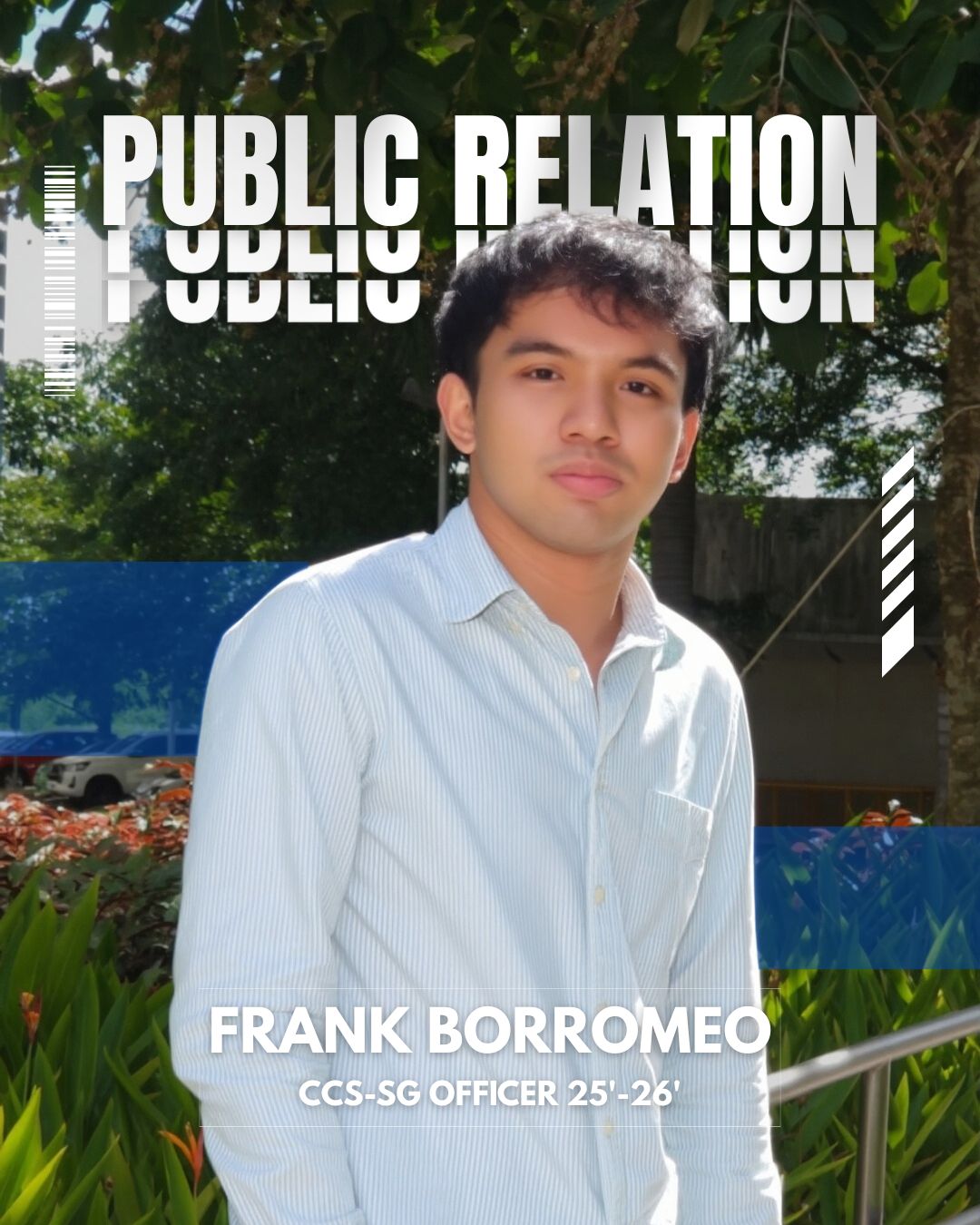
But then, A.Y. 2025-2026 threw them a curveball. Computer Studies broke off to become its own separate college: the College of Computer Science and Information Technology (CCS). Almost overnight, the small sub-organization they expected to lead was upgraded into its college's student government. Suddenly, the stakes—and the workload—were much higher.
“Oh my God. Ang hirap niyan. Ang daming duty,” Frank remembers thinking.
They could have backed out. But they didn't.
Today, Frank is now a fourth-year Computer Science student at LPU Cavite, a former Public Relations Officer of the CCS Student Government, and an intern in Makati. In his free time, he builds websites and applications when he sees a problem he thinks technology can make easier.
But before the impressive portfolio, he was a student put into a role he hadn’t prepared for—who simply decided to learn on the job.
The Role he Didn’t Expect
Frank stayed because he wanted to know what serving the student body actually felt like.
In reality, it meant organizing events, sacrificing time, finding speakers, and preparing pubmats. But watching students walk away from an event having learned something new made the work worth it.
And it was chaotic. Student government deadlines constantly collided with quizzes, exams, and regular coursework. Some nights, a pubmat due the following morning meant rushing home, cracking open his laptop, and staying awake to get it done.
He doesn't try to dress this up as a perfect lesson in work-life balance. It was difficult, and he didn't always get it right.
Sometimes he forgot tasks. Sometimes a classmate had to remind him that the deadline was tomorrow. Sometimes he had to lean on friends who were better at graphics.
But that's exactly how he made it work—the people around him.
When one officer could not finish something, another stepped in. When time ran short, the team found a way to complete what needed to be done. His biggest takeaway from student government was not time management or confidence.
Failing Forward and Paving the Way
When asked what he is most proud of, Frank points to the AI Hackathon. Not because it went flawlessly—but because it didn't.
“It wasn't the best, but it was my first time,” he admits.
It was his first time helping lead an event of that scale, and he juggled with visuals, music, and presentations. The process became difficult in places, but the event ultimately succeeded.
More importantly, it gave younger students a place to compete.
Among its winners were first-year students Jazztinn Legaspi, Nimeesha De Guzman, and Michael Baterna. They were entering the same space as students several years ahead of them, and would later become the founder, co-founder, and treasurer of NEXT.
Sometimes an imperfect event still opens the right door for someone else.
That is what Frank is most proud of.
The Freshman who Couldn't Read his Schedule
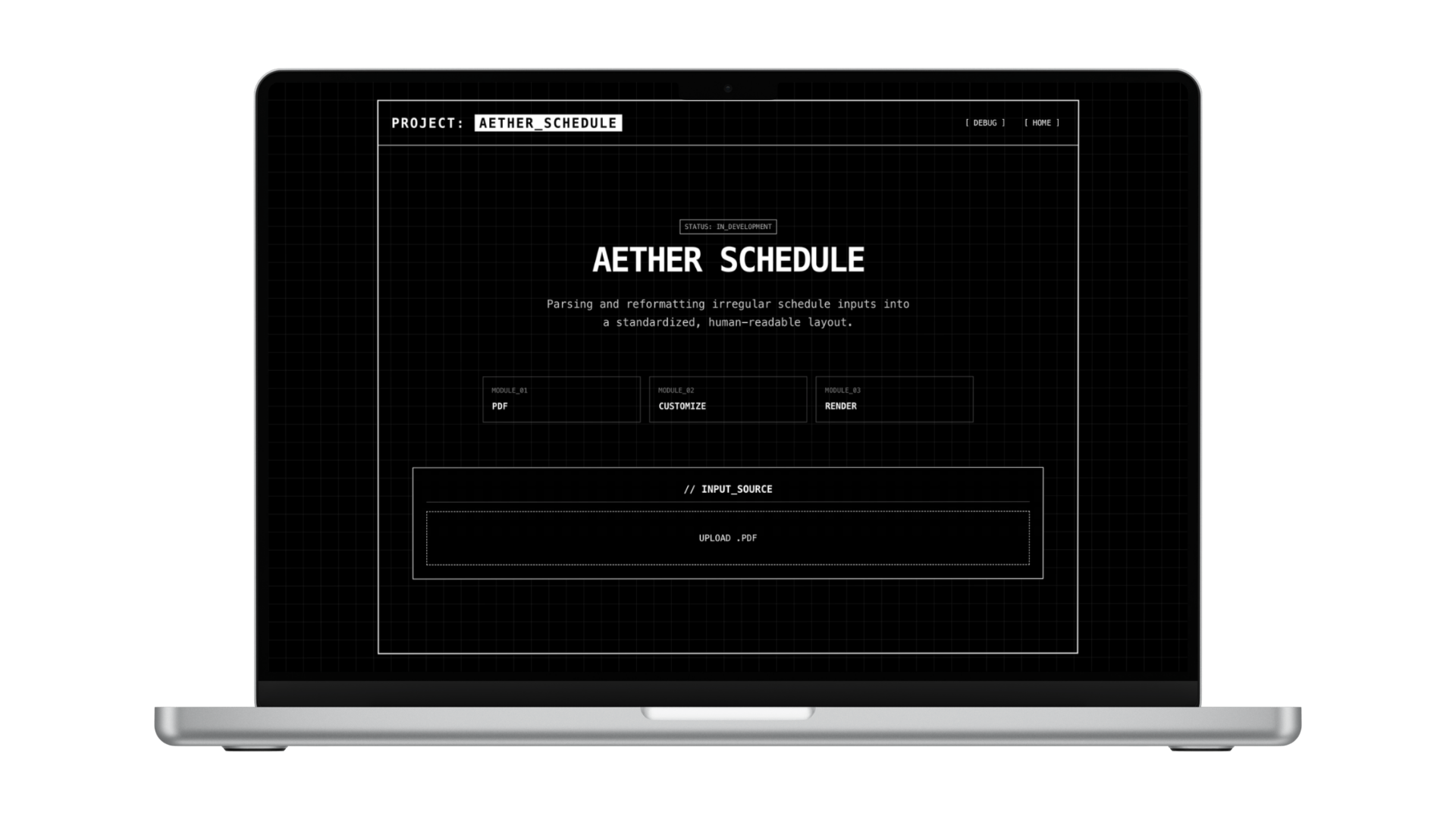
Before Frank built Aether Schedule, he was a first-year student who could only reliably remember one thing: classes started at 7:00 a.m.
After that, he kept asking his friends, “What time is the next class? Where are we going next?”
Frustrated with the cluttered layout of the standard Electronic Assessment Form (EAF), he tried recreating his schedule in Canva just to make it readable. Soon, he noticed his classmates doing the exact same thing—wasting time manually re-typing their dense EAFs into usable formats.
Frank knew there had to be a better way. Enter Aether Schedule.
He built a web tool where students could provide their EAFs and instantly generate a clean, customizable, and savable schedule. The development took about five months across two different periods because—at one point—he abandoned the project.
Then he came back to it.
The first time he shared Aether Schedule, the post received fewer than 100 interactions. Instead of giving up, he tweaked the website, changed the presentation, and posted it again. The second time around, it blew up, and earned over 400 interactions within a few hours. Soon, he was seeing fellow students and classmates use his generated schedules as their phone wallpapers.
He built something for a problem he knew because he had lived through it himself.
Aether Schedule is just one project in Frank's story. What matters more is the habit behind it: notice what’s difficult, try to make it easier, and if you fail the first time, try again with better bearings.
The Doubt never really Leaves
Frank still deals with imposter syndrome.
It creeps in while he is building something difficult, when the code isn’t working and finishing feels miles away. He catches himself wondering, “Am I really capable of doing this?”
His secret? He doesn't answer the question.
To him, answering too early can become a self-imposed limit. Saying “no” ends the work before it has the chance to become anything. So he keeps moving and lets the result answer for him.
Doubt, he says, can be a sign that you are learning. You have reached something you do not know how to do yet. Finishing anyway takes discipline, but that is also where growth happens.
The Real “Boss Level”
Hackathons once looked like a “boss level” to Frank—too large, too difficult, and meant for people who already knew what they were doing.
Then he actually joined one. The experience demystified the whole process. It wasn't easy, but it was possible.
His advice to students? Stop treating winning as the only reason to show up.
Outside technical knowledge, Frank believes every Computer Science student should learn how to network. Don't just sit in the audience—approach the speaker after the event. Ask questions. Connect on LinkedIn. Talk about what you're building instead of hoping someone magically discovers it.
Coding is only half the battle; communicating what you can do is what makes your work reach other people.
It also gives Frank a way to return opportunities to the community. When a professional shares an opening or program with him, he passes it to friends and students who might need it. Even after graduating, he wants to keep those connections and continue sharing what comes his way.
If he could tell his first-year self one thing, it would be this:
Tech keeps changing, and the people working in it need to keep changing too.
What Comes Next
Right now, Frank is completing his internship and developing an Android app designed to automate manual tasks for a specific community.
He’s also brainstorming about another tool for students: a website that could turn presentations and PDF lessons into an organized, printable reviewer. Students could choose the format and receive suggestions for remembering the material.
It’s still just an idea, he’s honest about that. It might evolve, or it might never become the version he currently imagines.
But the philosophy behind it is crystal clear. He wants students to use artificial intelligence as a tool for learning, not as a crutch that does all the learning for them. He wants to build focused tools that help people understand and organize their work instead of replacing the work altogether.
For Frank, taking the NEXT step doesn’t mean you have to know exactly how things will turn out.
It means carrying something forward from the last thing you survived, finished, or almost abandoned.
Frank wasn't ready when SATA became a full student government. He wasn't sure the Aether Schedule would work when he finally returned to it. And he still doesn't wait for his doubt to disappear before he starts his next project.
He starts with what he knows. Then he learns the rest along the way.
If Frank's story resonated with you, explore his work and connect with him!
Portfolio: frankborromeo.com
LinkedIn: linkedin.com/in/frank-borromeo
Aether Schedule: frankborromeo.com/aether-schedule
Comments (0)