
Sugidanon: Commutes, Caffeine, Karaoke, and a Hackathon
I first came across FEU Tech’s ACM TechSprint Asteria through LinkedIn.
The moment I saw that they were holding a hackathon, I signed up our team almost immediately. There was no perfect plan yet, but it felt like one of those opportunities we could just take and figure out along the way. (Just like how we've done with previous hackathons.)
From past hackathons, we had already learned that preparation helps, even when things do not go as planned. Before the event, we prepared an app boilerplate and even an ideathon template, mostly out of habit. We did not know yet what project cases we'd be provided with, but we wanted to be ready.
On the first day, I woke up at 4 AM so we could get to PITX by 7 AM and hopefully arrive before the 9 AM call time. But after the usual heavy Cavite traffic through Bacoor and Kawit, we reached FEU Tech at around 9:40 AM. Late, but thankfully, it wasn't a big deal.
When we arrived, I saw familiar faces; seniors from my previous university, Angeles University Foundation. It felt nice seeing them there, especially because before I left AUF, I had always wanted to meet them in external tech events.
It also became clear early on that most of the people there were more experienced than us. A lot of them were third years, fourth years, already working with startups, or even already graduated.
And then there was us.
First years. Freshies. Just there for the food.
The case we chose
Then the project cases were revealed.
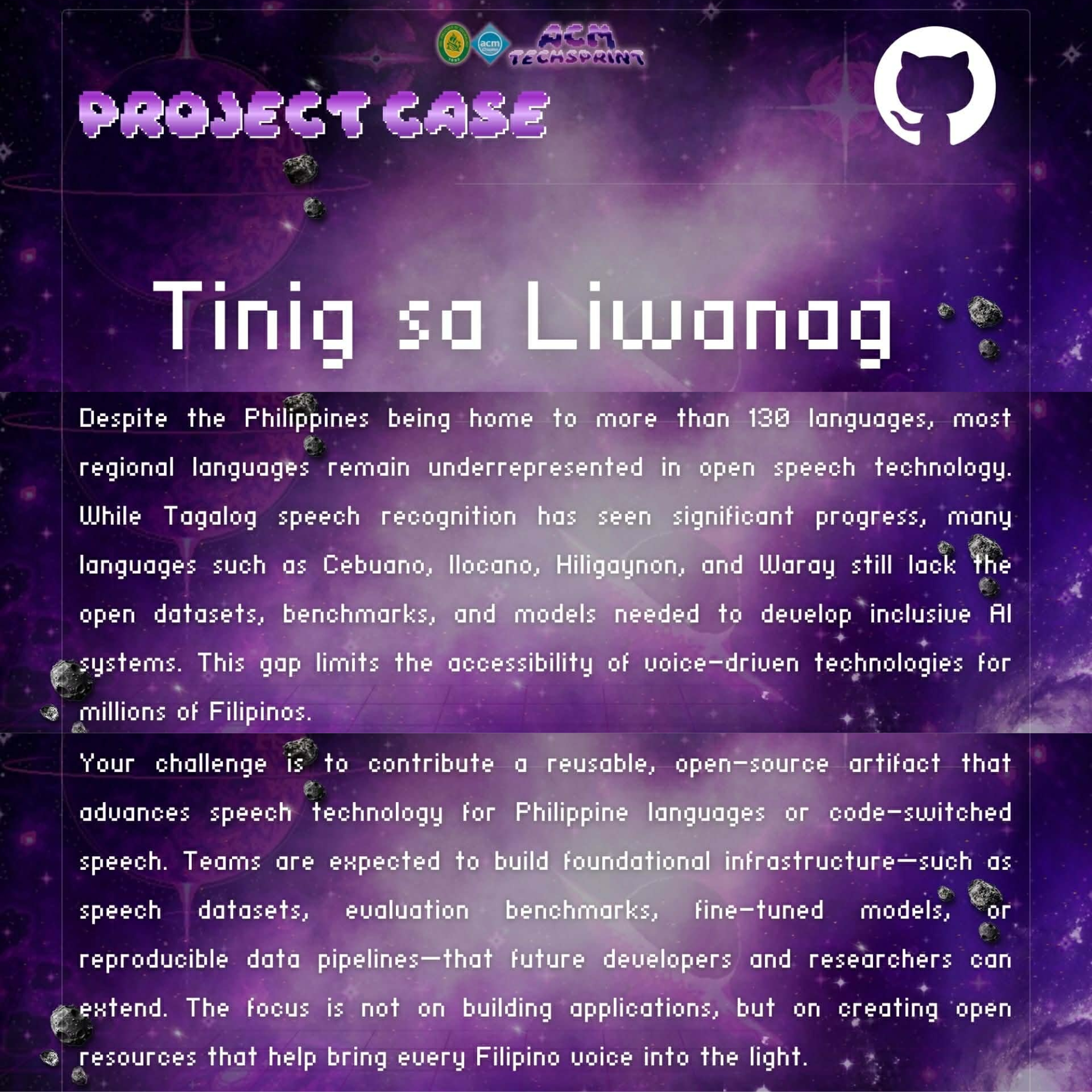
The case we chose was Tinig sa Liwanag, a backend-focused challenge about helping developers use audio and text resources for speech AI. It focused on the lack of open datasets, benchmarks, and models for Philippine regional languages like Hiligaynon, Cebuano, Ilocano, and Waray.
Honestly, it was NOT the safest choice.
It did not really match the boilerplate we prepared, and it was a territory we were not fully familiar with. But that was also why we chose it. Fewer teams seemed to go for that case, and coincidentally, my AUF seniors chose the same one too. (It made sense. After all, we were like-minded.)
So we just went with it.
Making the dataset ourselves
Our idea eventually became Sugidanon, an Ilonggo/Hiligaynon word for storytelling.
We wanted to make something around Hiligaynon speech, especially the way it is actually spoken in real life — mixed with Tagalog and English. Not clean, textbook language, but the kind of code-switching people actually use when they talk.
The problem was that we could not easily find usable Hiligaynon speech datasets online.
So we made one ourselves.
Through a friend, we found someone who speaks Hiligaynon. I made a script for her to record and added instructions on pacing, tone, and intonation. She agreed, and even though the recording process only took a few minutes, that small dataset became one of the most important parts of the project.
After getting the audio, I cut the files, structured the data, and uploaded everything to Hugging Face. From there, we divided the work. Nimeesha worked on the pitch deck and video presentation, Arwin searched for more resources, Michael worked on the frontend and demo direction, and I handled the backend, CLI functionality, Google Colab support, and benchmark flow.
By the end of the first day, we were tired, but we had something going.
We walked around the venue, looked at other teams’ work, talked to people, took pictures, and just enjoyed being there. It was not just about coding the whole time. A lot of the fun came from being in the same space as other students building things too.
The commute home was a side quest
Then came the commute home.
Somehow, going home felt harder than getting there. Traffic was worse, getting to PITX took longer than expected, and when we finally arrived, we ate at KFC and “bomba’ed” — basically, we ate a lot.
After that, we got on a bus, and with our luck, we had to stand the whole ride back to Imus and Bacoor.
When I got home, I bought two cans of Monster.
That was probably a bad idea.
I drank one and went straight back to work. I did not sleep. I just kept building with loud music playing, caffeine in my system, and the project still stuck in my head.
By around 5 AM, the project was mostly done.
At 9 AM, I had to go to Nimeesha’s house for the second day. On the way there, I drank the second can of Monster.
That was definitely a bad idea.
I felt dizzy, sleepy, and nauseous. I remember seeing my reflection in the jeep’s side mirror, with my eyes dark and heavy, thinking I might actually puke.
But I got there.
Ten seconds before the deadline
We continued working, but the second day felt less like a serious grind and more like everyone trying to survive the deadline together.
Nimeesha and Arwin also became additional audio sources, the pitch deck was finished, and we rushed the video presentation.
Somehow, we submitted around 10 seconds before the deadline.
After that, we waited.
We were tired, restless, and too drained to sleep properly, so we ended up doing karaoke. Then, while we were still singing, the finalists were announced.
Team Hague.
That was us.
It was a nice surprise, but honestly, the funniest part was that it happened while we were doing karaoke.
After that, we all went home and finally slept.
Third day, Q&A, and MOA
On the third day, we returned for the final round.
Because of a time conflict, we did not pitch live. They played our video presentation instead, and afterward, we answered the judges’ questions.
We thought we did badly.
After lunch, we were already talking about what we would do after the event, assuming that was it. Then the results were announced, and we got Honorable Mention.
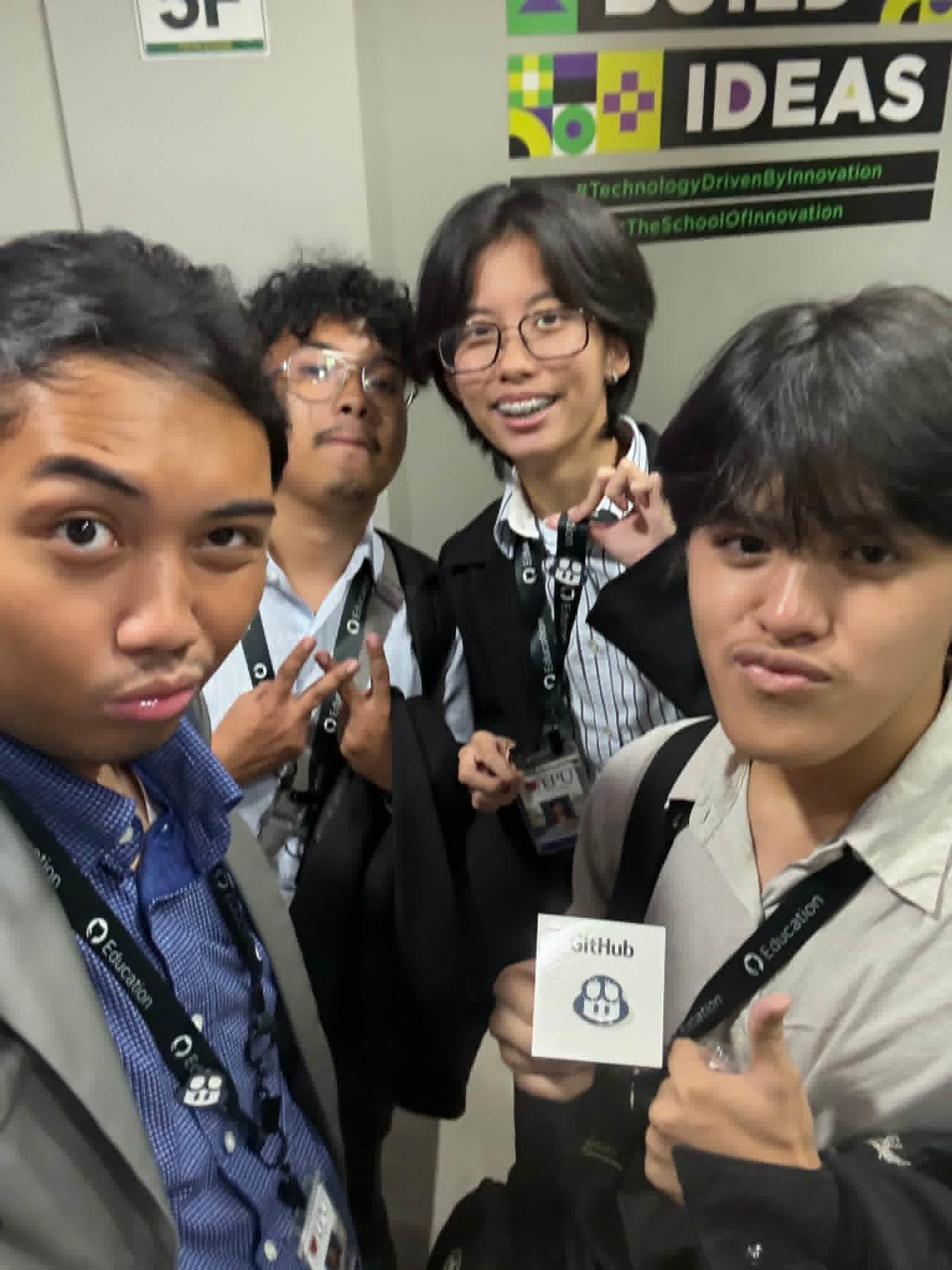
We received GitHub merch, had our photo taken, and then did what felt like the most natural thing after everything:
We went to MOA.
We played at the arcade, rode Vikings, messed around for a bit, and just enjoyed the rest of the day before finally heading home.
Looking back
Looking back, Sugidanon wasn't really about the output or the recognition.
It was the commute, the caffeine, the rushed deadline, the random karaoke, the inside jokes, the tired conversations, the food, the panic, and the fun of building something with friends.
It was also a reminder that even as freshies in a room full of people more experienced than us, showing up and trying still counts for something.
For a project named after storytelling, it felt fitting.
Sugidanon became its own little story too.
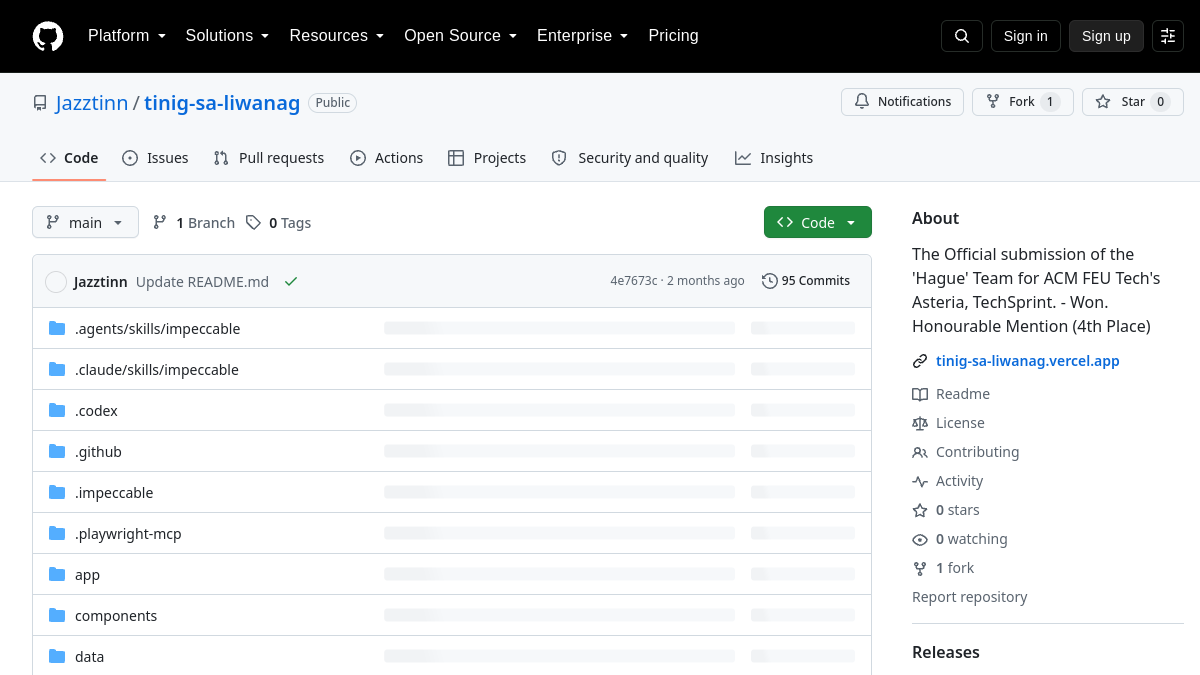
View Sugidanon here:
Comments (0)